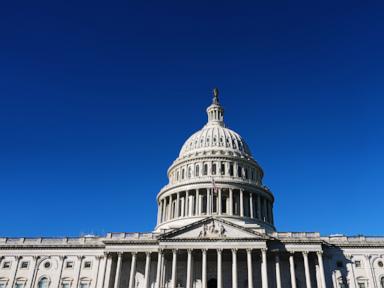
Capturing at least 258 seats in the United States House of Representatives establishes a 40-seat structural buffer above the 218-seat threshold required for chamber control, fundamentally altering legislative throughput, committee governance, and executive oversight. In a 435-member body, securing 59.3 percent of the chamber eliminates the paralyzing friction of narrow majorities—where single-digit margins allow micro-factions to extract disproportionate policy concessions or stall routine floor procedures. Reaching this scale, unmatched by the Democratic Party since the 103rd Congress following the 1992 election cycle, shifts the operational reality of the lower chamber from fragile coalition maintenance to centralized agenda execution.
Understanding the mechanics of a 258-seat majority requires separating the electoral anomaly from the institutional machinery it unlocks. Standard political commentary treats seat totals merely as scoreboard metrics of public sentiment. From an operational standpoint, however, seat count functions as an input variable into institutional game theory, determining vote-whipping tolerances, committee ratio dominance, and the durability of legislative coalitions across divergent ideological districts.
The Mathematics of Floor Control and Whipping Tolerance
The primary operational impact of a 258-seat caucus lies in its defection tolerance. Under a 222-seat majority—a common baseline in recent polarized cycles—leadership operates with a margin of error of just four votes. Every piece of must-pass legislation, from appropriations bills to debt ceiling adjustments, becomes vulnerable to holdout blocs representing fewer than two percent of the total chamber.
At 258 seats, assuming full attendance, leadership can absorb 40 defections before losing a floor vote on a simple majority measure. This mathematical cushion restructures internal bargaining dynamics in three ways:
- Neutralization of Ideological Vetoes: Neither the progressive wing nor the centrist frontline caucus holds a unilateral veto over floor proceedings. If a faction of 25 members threatens to withhold support to force an amendment, leadership retains a 15-vote surplus to pass the underlying rule and bill without yielding.
- Reduction in Transaction Costs: Vote-whipping operations consume immense political capital, committee assignments, and leadership favors. A 40-vote buffer reduces the marginal cost of securing the 218th vote, allowing leadership to advance complex bills without attaching costly legislative riders designed solely to buy off recalcitrant members.
- Procedural Insulation: Control over the House Rules Committee—traditionally structured on a 9-to-4 ratio regardless of floor margin—becomes frictionless when backed by a 258-seat floor majority. Dissenting majority members cannot credibly threaten to join the minority party to defeat the "previous question" motion or tank a rule on the floor.
The Structural Paradox of Wave Majorities
While a 258-seat majority maximizes short-term procedural power, it simultaneously introduces severe ideological heterogeneity that complicates long-term governance. Expanding beyond a core base of approximately 210 to 220 safe seats requires capturing 38 to 48 districts that lean toward the opposing party or exhibit high ticket-splitting volatility.
This expansion creates an inverse relationship between majority size and ideological cohesion. The newly acquired seats are disproportionately occupied by representatives from swing districts, suburban battlegrounds, and rural-adjacent territories whose local electoral incentives diverge sharply from those of members representing safe urban strongholds.
In institutional analysis, this produces a two-tiered caucus structure:
- The Core Base (Seats 1–215): Members insulated from general election threats whose primary electoral vulnerability lies in low-turnout partisan primaries. Their policy preferences favor ideological purity and aggressive messaging bills.
- The Expansion Tier (Seats 216–258+): Members whose political survival depends on crossover appeal and moderate positioning. Their incentives favor localized constituent service, bipartisan framing, and distancing from national party branding on polarizing social or fiscal issues.
Managing a 258-seat majority therefore requires managing an internal fault line. Leadership must constantly calculate whether passing a high-profile partisan measure is worth exposing 40-plus expansion-tier members to lethal general election attack advertisements two years later.
Committee Ratios and Investigative Bandwidth
Beyond floor mathematics, a 59.3 percent chamber share dictates the allocation of institutional resources across standing and select committees. Committee ratios are negotiated at the start of each Congress to roughly mirror the partisan split of the full House. Moving from a narrow majority to a 258-seat majority shifts committee compositions from tight margins (such as 24-to-20) to commanding super-ratios (such as 28-to-19 or 30-to-20).
This ratio expansion yields concrete operational advantages:
- Subcommittee Multiplication and Oversight Capacity: Larger majority rosters allow the majority party to staff aggressive oversight subcommittees without stretching individual members across too many conflicting assignments. This expands the chamber's capacity to issue subpoenas, conduct depositions, and hold simultaneous high-profile hearings across multiple jurisdictions—from financial services and energy to judiciary and intelligence.
- Markup Acceleration: In committee markups, where legislation is debated and amended line-by-line, a wide partisan ratio prevents the minority party from utilizing procedural delays or exploiting single-member absences to pass hostile amendments. Bills move from introduction to floor calendar on predictable timelines.
- Appropriations Control: The House Appropriations Committee wields the constitutional power of the purse. A dominant ratio ensures that spending bills reflect majority priorities during committee drafting, reducing the need for emergency floor substitutions before budget deadlines.
Historical Benchmarking Against the 1992 Baseline
Comparing this threshold to the 1992 election—when Democrats won 258 seats alongside a newly elected Democratic president—highlights how institutional contexts alter the utility of identical seat counts.
In 1993, the 103rd Congress operated under lower levels of partisan sorting. The Democratic caucus still contained a substantial bloc of conservative Southern lawmakers, while the Republican minority included moderate Northeastern members. Consequently, a 258-seat majority in 1993 did not guarantee party-line unity; leadership frequently had to construct cross-aisle coalitions to pass major trade agreements like NAFTA, while struggling to pass party-line budget reconciliation bills by a single vote.
Modern congressional dynamics exhibit vastly higher partisan sorting and geographic polarization. Ticket-splitting has declined precipitously, meaning a modern 258-seat majority represents a far more sweeping national electoral shift than an identical seat count did three decades earlier. To reach 258 seats in an era of sophisticated redistricting and entrenched partisan baselines requires overwhelming national wave dynamics—typically driven by sharp midterm backlash against an incumbent administration, severe macroeconomic dislocation, or unprecedented voter turnout differentials.
Furthermore, modern caucus discipline is tighter than its early-1990s counterpart. Even the most moderate expansion-tier members today vote with their party leadership at rates exceeding 85 to 90 percent on key procedural and substantive measures, compared to the frequent cross-party defections of the 1990s. Thus, a 258-seat majority in the contemporary House wields substantially greater raw partisan force than the 1992 cohort.
Constraints of Bicameralism and Executive Veto
A rigorous evaluation must account for the external boundaries of House power. Even an insurmountable House majority remains only one-third of the constitutional lawmaking apparatus. The operational value of 258 House seats degrades rapidly if not paired with alignment in the Senate and the White House.
Under divided government, a 258-seat House majority cannot unilaterally enact statutory changes. Its operational utility shifts from legislative production to agenda framing and veto leverage:
- Senate Bottlenecks: Legislation passed effortlessly through the House still confronts the 60-vote cloture threshold in the Senate for non-reconciliation bills. A massive House majority can flood the Senate calendar with messaging bills, forcing vulnerable senators to take difficult votes, but it cannot override Senate procedural rules.
- Presidential Veto Calculus: Overriding a presidential veto requires a two-thirds supermajority in both chambers—290 votes in the House, assuming all members vote. Even at 258 seats, the majority falls 32 votes short of unilateral override capacity. Passing bills over executive opposition still requires peeling off dozens of minority party members.
- Appropriations Brinkmanship: Where a 258-seat House exerts maximum bilateral pressure is during mandatory funding deadlines. Because all revenue and spending bills originate in the House by custom and constitutional design, a unified 258-seat majority can pass its preferred funding baseline early, placing the burden of a government shutdown squarely on the Senate or the White House if they reject the House text.
Electoral Vulnerability and the Reversion to the Mean
Historical election data demonstrates that large House majorities carry built-in decay mechanisms. Because seats 220 through 258 are won in territory naturally favorable or neutral to the opposing party, they are structurally exposed to mean reversion in the subsequent two-year cycle.
In the 1994 midterm elections—just two years after winning 258 seats—Democrats lost 54 seats, surrendering the House majority for the first time in 40 years. That collapse was driven directly by the overextension of their 1992 map. When the national political environment neutralized and shifted slightly against the governing party, dozens of districts that had barely tipped into the majority column reverted instantaneously.
Leadership managing a 258-seat caucus faces a precise strategic dilemma: over-utilizing the majority to pass sweeping, ideologically ambitious policies satisfies the core base but accelerates the electoral destruction of the expansion tier. Conversely, governing cautiously to protect the 40 most vulnerable incumbents risks demoralizing the base and squandering a rare historical mandate.
Strategic Execution for a 258-Seat Majority
To extract maximum institutional value from a 258-seat majority before the inevitable two-year electoral correction occurs, chamber leadership must execute a sequenced operational plan:
- Front-Load High-Friction Legislation in Months One Through Six: Deploy the 40-vote cushion immediately during the first session to pass complex, controversial priorities—such as tax restructuring, regulatory overhauls, or major entitlement adjustments—while political capital is at its peak and the next election remains distant enough for voter memory to fade.
- Deploy Surgical Exemptions for Expansion-Tier Members: Establish a disciplined vote-tracking protocol that allows the 30 to 40 most vulnerable swing-district incumbents to vote against party leadership on messaging bills that pose local electoral risks, reserving strict whipping discipline exclusively for procedural rules and must-pass fiscal legislation.
- Institutionalize Oversight Through Subpoena and Appropriations Riders: Shift focus in the second year from sweeping floor legislation to targeted committee investigations and granular appropriations policy riders, which allow the caucus to shape executive branch behavior without forcing frontline members to cast high-risk standalone floor votes.