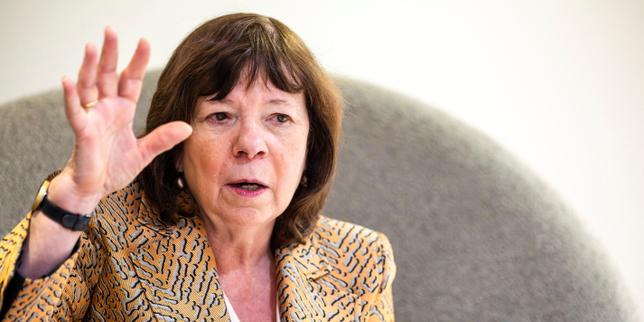
International law is facing an existential showdown in a Manhattan federal court. Three sitting judges from the International Criminal Court (ICC) just took the extraordinary step of suing US President Donald Trump and his top administration officials. They aren't asking for money. They want their lives back.
Last year, Washington slapped sweeping financial sanctions on these judges. The reason? The court had the audacity to issue arrest warrants for Israeli Prime Minister Benjamin Netanyahu and investigate potential war crimes by US troops in Afghanistan. Now, Judges Kimberly Prost of Canada, Solomy Balungi Bossa of Uganda, and Reine Adélaïde Sophie Alapini-Gansou of Benin are hitting back.
This isn't just a dry, academic fight over treaties. It's a brutal demonstration of how economic warfare can completely erase an individual's financial footprint.
The Reality of a Financial Death Penalty
When people hear about international sanctions, they usually think of Russian oligarchs losing their mega-yachts or rogue states blocked from selling oil. You rarely think about a respected jurist being unable to buy groceries online.
Because the US dollar dominates global finance, any bank on earth with American ties must comply with these rules or risk devastating fines. The lawsuit filed in the Southern District of New York reveals that the targeted judges are experiencing what their legal team calls a financial death penalty.
Consider what happens when the US Treasury Department puts your name on the Specially Designated Nationals list.
- Basic Banking Evaporates: Your credit cards stop working instantly. Local banks freeze your savings because they are terrified of losing access to the US financial system.
- Digital Life Ends: You get blocked from essential online services like Google and Amazon.
- Insurance is Canceled: In some cases, even health insurance providers have dropped coverage to avoid violating American law.
The sanctions were built to break these individuals personally. By making daily existence an administrative nightmare, the measures attempt to force a choice: protect your family's financial survival or uphold the law without fear or favor.
The Flawed Logic of the National Emergency
The legal core of the judges' lawsuit takes direct aim at how the White House uses and abuses economic power. The sanctions rest on Executive Order 14203. This order declares a national emergency, claiming that the ICC's investigations into US personnel and close allies like Israel represent an extraordinary threat to American national security.
The judges argue this standard is completely arbitrary and capricious. Investigating a country for alleged war crimes might be politically inconvenient, but calling it a national emergency stretches the legal definition past its breaking point.
The White House defended its actions by stating that the administration will not allow unelected foreign judges to dictate terms to the United States. Secretary of State Marco Rubio has repeatedly argued that the court lacks any authority over citizens of countries that never signed the Rome Statute, the 2002 treaty that built the ICC.
But this argument ignores a fundamental reality of international justice. The ICC does not claim jurisdiction based on the nationality of the accused; it claims jurisdiction based on where the crimes occurred. If an alleged crime happens on the territory of an ICC member state, the court has a legal mandate to investigate, no matter where the perpetrator calls home.
A History of Retaliation
Washington has a long history of hostility toward the Hague. The tension goes back to the court's founding, but the tactics have turned increasingly aggressive.
During Trump's first term, the US sanctioned then-Prosecutor Fatou Bensouda to block an investigation into actions in Afghanistan. The Biden administration later lifted those restrictions, trying to find a middle ground while offering limited cooperation regarding war crimes investigations in Ukraine. That brief window of diplomacy has closed.
The latest round of penalties includes at least 11 ICC officials. Alongside the president, the judges are suing a long list of high-ranking officials including Treasury Secretary Scott Bessent, Acting Attorney General Todd Blanche, and Bradley Smith, the director of the Office of Foreign Assets Control (OFAC).
What Happens to Global Justice Now
This lawsuit marks the fifth distinct legal challenge against Executive Order 14203. Previous cases, often brought by legal experts or organizations working with the court, successfully argued that the sanctions violated free speech protections by criminalizing basic legal assistance.
This case is different. It is the very first time the judges themselves have entered an American courtroom as plaintiffs.
If the court rules in favor of the White House, it sets a terrifying precedent. Any powerful nation unhappy with a judicial ruling could simply freeze the personal bank accounts of the judges involved. It turns international law into a game where the guy with the biggest financial system wins by default.
For the international legal system to function, judicial independence cannot be up for negotiation. The Manhattan federal court now has to decide whether American executive power stops at the edge of a judge's bench or if Washington can truly dictate who gets to hold the scales of justice.