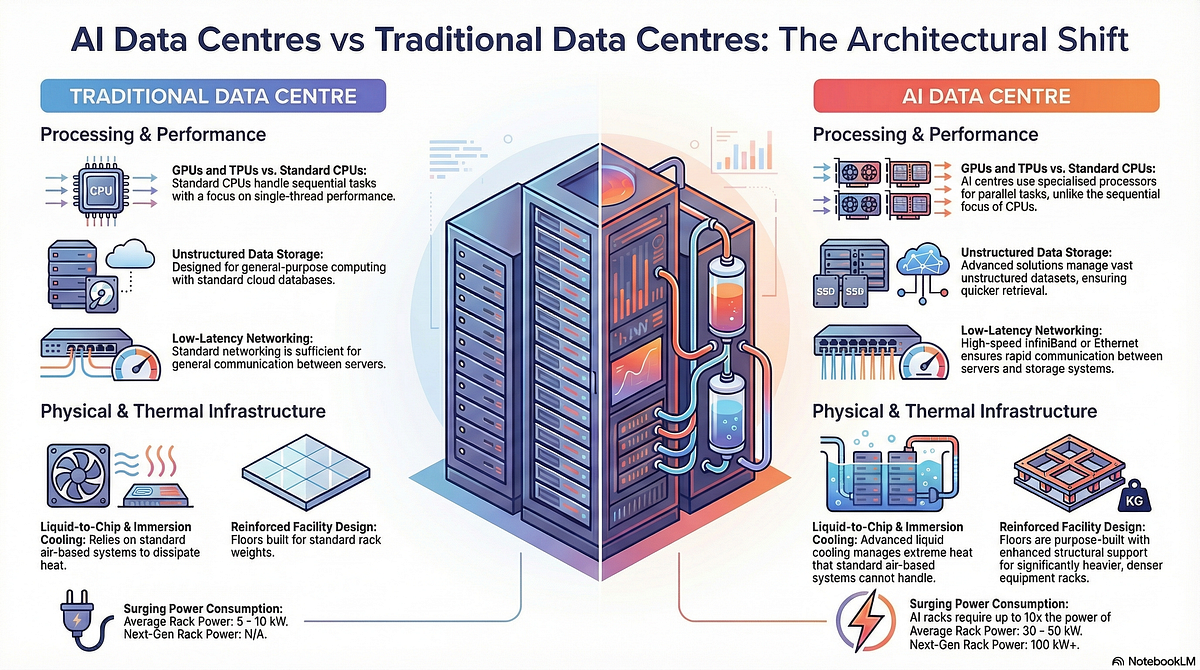
You can't scroll through a local news feed or drive down a rural highway without noticing something strange happening. Mega-warehouses the size of multiple football fields are sprouting up overnight, packed with thousands of servers designed to power machine learning models. And local residents are absolutely furious.
If you want to understand why AI data center backlash has mutated from a minor zoning dispute into a dominant force in modern politics, look at the math. A single hyperscale computing facility can consume as much electricity and water as a medium-sized city. When utility bills jump, local wells run dry, and the promised tech jobs turn out to be just a handful of permanent maintenance gigs, communities push back hard.
Americans don't always know how to regulate complex algorithms or stop algorithmic bias. But they definitely know how to spot a massive, humming power hog destroying their local landscape. Because artificial intelligence lacks a physical face, these industrial server farms have become the primary proxy for public anger against big tech.
The Political Shift No One Saw Coming
For years, state lawmakers rolled out the red carpet for tech giants. Governors from both parties tripped over themselves to hand out massive tax breaks, eager to claim they were bringing the future of technology to their backyards. That bipartisan honeymoon is officially over.
We are seeing a complete political realignment. With the midterm elections looming, opposition to unregulated tech infrastructure has turned into an unexpected wedge issue. In states like Pennsylvania, Texas, Arizona, and Illinois, candidates are finding that standing up to massive infrastructure projects is an easy way to energize voters.
Incumbents who once championed tech expansion are suddenly scrambling to reverse course. When governors sign executive orders forcing developers to meet strict grid requirements before getting a single permit, they're reacting to cold electoral survival. Voters care about keeping their lights on and their water bills stable. If a massive server farm threatens those basic needs, party lines shatter immediately.
Why the Economic Promise Falls Flat
Tech PR teams love to talk about community investment. They pitch these facilities as engines of economic vitality that will transform quiet towns into modern hubs of innovation. The reality on the ground looks entirely different.
Once construction wraps up, a multi-million-square-foot facility might only employ a few dozen people. Most of the high-paying engineering jobs stay locked away in Silicon Valley or Seattle. Meanwhile, the local municipality is left holding the bag. They inherit worn-out roads from heavy construction trucks, strained municipal water supplies, and a grid stretched to its absolute breaking point.
When you hand out massive tax exemptions to trillion-dollar corporations while local residents face skyrocketing utility rates, the public resentment writes itself. It is no surprise that campaign ads are filling up with pointed attacks against these projects. Politicians are realizing that siding with big tech on infrastructure is a quick ticket out of office.
What Happens When Communities Say No
Cities and towns aren't just complaining; they are building a playbook for resistance. More than three hundred local jurisdictions have already enacted strict bans or moratoriums on hyperscale construction. New York enacted the first statewide pause, and other states are racing to catch up.
This localized friction is sending shockwaves through the tech industry. Billions of dollars in planned investments are sitting in limbo because local zoning boards are refusing to rubber-stamp permits. Tech executives assumed they could build wherever cheap land and weak regulations met. They miscalculated the depth of public distrust.
If you are tracking where technology meets everyday life, stop looking at software updates and start watching local planning commission meetings. That is where the actual battle over the future of artificial intelligence is taking place. Pay attention to how local candidates vote on zoning laws, press your representatives on grid capacity transparency, and look past the corporate marketing promises to examine the actual resource costs in your neighborhood.


