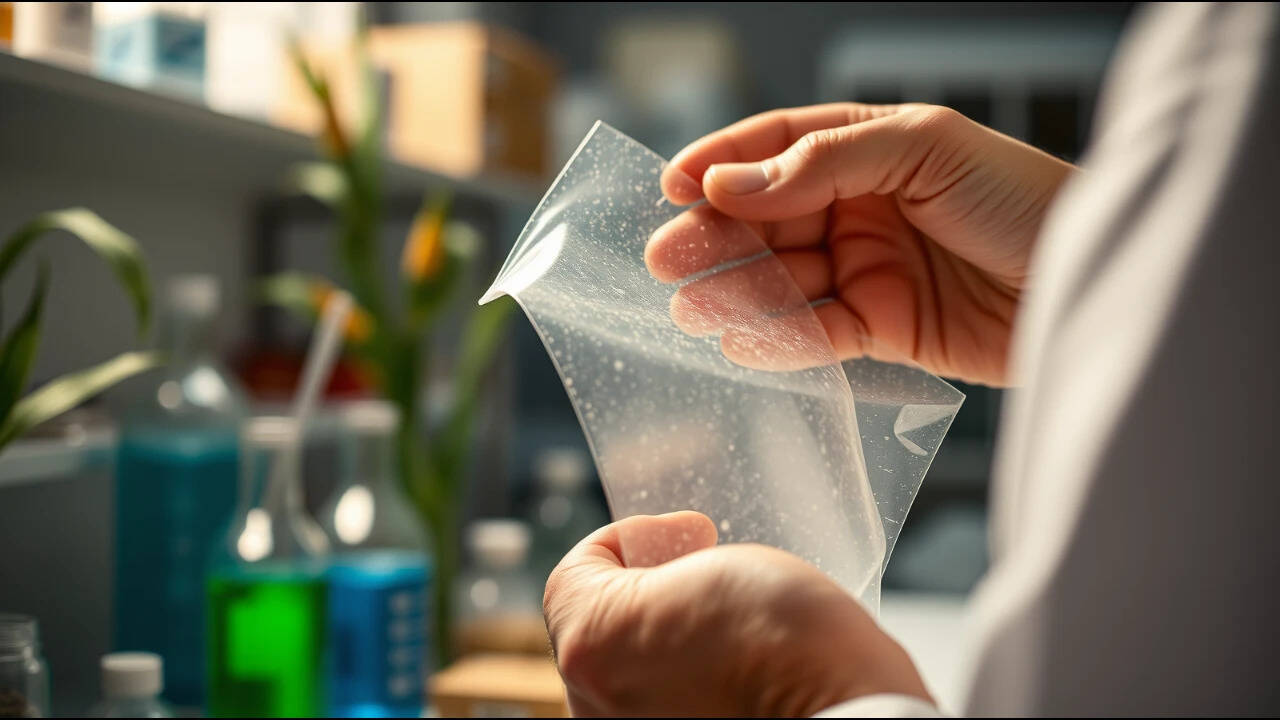
The scaling limitations of petroleum-derived polyethylene agricultural films have forced a structural shift toward bio-based feedstocks. Traditional low-density polyethylene mulch sheets control weed proliferation and regulate soil thermodynamics effectively, yet their persistence introduces long-term soil contamination through microplastic fragmentation. Recovering functional polymers from agricultural residues such as sugarcane bagasse and maize stalks establishes an alternative mechanism for closed-loop soil amendment. Evaluating this transition requires examining the chemical architecture of plant biomass, the processing constraints of polymer extraction, and the economic hurdles of field-scale deployment.
The Biomass Composition Matrix
Agricultural by-products derive their structural integrity from three primary macromolecular components: cellulose, hemicellulose, and lignin. Sugarcane bagasse and maize stalks present high proportions of lignocellulosic fibers, acting as natural polymer networks. Transforming these waste streams into functional bioplastics demands the disruption of strong intramolecular hydrogen bonds within the crystalline cellulose regions.
Chemical engineering interventions rely on depolymerizing these rigid structures via solvent systems, acid hydrolysis, or enzymatic treatments to isolate usable polysaccharides. Maize stalks provide high starch and cellulose content, whereas sugarcane bagasse offers a dense fibrous framework rich in cellulose and lignin derivatives.
Feedstock variability introduces distinct processing challenges. Unlike uniform petrochemical inputs, agricultural residues fluctuate in composition depending on soil chemistry, climate variations, harvesting techniques, and storage conditions. Processing these matrices requires pretreatment protocols designed to fractionate lignin without degrading the underlying carbohydrate chains necessary for film formation.
Polymer Synthesis and Extrusion Parameters
Converting raw lignocellulosic waste into a workable film involves gelatinization, plasticization, and thermomechanical extrusion. Starches and extracted celluloses behave differently under thermal and shear stress compared to synthetic thermoplastics. Plasticizers such as glycerol are introduced to reduce internal hydrogen bonding between polymer chains, lowering the glass transition temperature and improving film flexibility.
The comparative synthesis of bioplastics from alternative feedstocks, including industrial hemp and maize stalks, highlights key mechanical trade-offs. While hemp fibers enhance tensile strength and tear resistance due to high cellulose crystallinity, maize and bagasse matrices offer superior processability and lower baseline material acquisition costs.
Extrusion parameters must balance thermal degradation thresholds against melt-flow indices. Exceeding specific temperature limits during compounding causes charring of the biomass fraction, compromising the structural homogeneity of the resulting sheet. Controlling moisture content prior to pelletization remains critical; residual water vapor causes micro-voids and structural weaknesses within extruded mulch films.
Agronomic Performance Metrics
Deploying biodegradable mulch films into active agricultural environments demands precise control over degradation rates. A functional bioplastic mulch must maintain mechanical integrity throughout the crop cycle, resisting tearing under wind stress and heavy rainfall while suppressing weed germination through light exclusion.
Degradation kinetics are governed by soil microflora activity, ambient temperature, moisture levels, and pH. Once the target crop harvesting phase concludes, the material should undergo accelerated microbial mineralization without leaving persistent synthetic residues.
Field conditions frequently disrupt predictable degradation timelines. Arid soils with low microbial populations decelerate decomposition, leaving structural fragments intact longer than intended. Conversely, excessive soil saturation triggers premature microbial attack, causing the film to disintegrate before completing its weed-suppression and moisture-retention functions. Balancing longevity with compostability represents the central design constraint for agricultural biopolymers.
Techno-Economic Scaling Barriers
Laboratory-scale synthesis of bioplastics from agricultural residues demonstrates technical feasibility, yet scaling to industrial volumes encounters severe economic bottlenecks. Feedstock logistics represent the primary expenditure variable. Agricultural waste is seasonal, spatially distributed, and bulky, incurring high transportation and storage costs prior to processing.
Energy requirements for pretreatment, fiber extraction, and compounding rival or exceed those of conventional polymer manufacturing unless integrated directly into existing industrial infrastructure, such as sugar mills or grain processing facilities. Co-locating bioplastic production units alongside sugar mills allows direct utilization of bagasse streams while minimizing raw material transport overhead.
Market adoption depends entirely on cost parity with conventional low-density polyethylene films. Farmers operate on tight margins and will not absorb premium input costs without regulatory mandates or verified yield enhancements. Long-term commercial viability requires optimizing chemical recovery rates, minimizing solvent losses, and establishing localized manufacturing hubs to eliminate supply chain vulnerabilities.
Optimize feedstock pre-treatment protocols by deploying enzymatic fractionation to maximize cellulose purity while reducing chemical solvent waste in industrial processing units.