Walk through any neighborhood in Lagos, Nairobi, or Accra after a heavy downpour, and you will see it. Plastic bottles, nylon bags, and organic refuse form thick, colorful carpets blocking drainage ditches. When the water has nowhere to go, it floods homes, ruins livelihoods, and spreads waterborne disease. This isn't just an aesthetic nuisance. It is an existential crisis that is outpacing municipal infrastructure across the continent.
Urbanization across Africa is happening at a breakneck pace. Millions of people move from rural areas to cities every single year in search of jobs, education, and better futures. Municipal governments, many of which still operate on bureaucratic, underfunded frameworks inherited from past decades, simply cannot keep up. Trash trucks break down. Fuel budgets dry up. Neighborhoods that spring up overnight lack paved roads, let alone municipal waste collection routes.
The result is a mounting mountain of refuse that chokes waterways, poisons soil, and threatens public health on a massive scale. If you look past the glossy skylines of Africa's booming commercial hubs, you find a grim reality of uncollected garbage and failing governance. Understanding how this happened requires looking at the collision between explosive urban growth, outdated municipal systems, and the shifting nature of global consumer goods.
The Broken Arithmetic of Municipal Budgets
Cities do not run on good intentions. They run on cash. Right now, the financial math of municipal waste management in most sub-Saharan African cities doesn't add up.
Consider the sheer volume. Cities like Lagos produce over 13,000 tons of solid waste every single day. Less than half of that gets collected by formal municipal services. The rest sits in open dumps, gets burned in back alleys, or washes into lagoons and rivers.
Why aren't cities collecting it? Property tax collection rates remain stubbornly low. Local governments struggle to capture revenue from informal economies that make up the vast majority of economic activity. Without a reliable tax base, municipal councils cannot buy enough collection trucks, maintain incinerators, or build sanitary landfills that meet basic environmental standards.
Instead, cities rely on patchwork funding, donor grants, and emergency bailouts from national governments. These funds come and go, but the trash keeps piling up. When a city council has to choose between paying teachers, fixing broken water pipes, or paying private contractors to haul garbage, waste management almost always loses out. The consequences of that choice take years to manifest, but when they hit, they hit hard.
Anatomy of a Choked Neighborhood
When municipal collection fails, neighborhoods have to adapt. Usually, adaptation means burning trash in the street or dumping it in the nearest empty lot, ravine, or storm drain.
The health toll is devastating. Piles of rotting organic waste mix with discarded electronics and medical refuse, creating breeding grounds for mosquitoes, rats, and flies. Malaria, cholera, and respiratory infections run rampant in areas where waste management is absent. Children play near burning plastic heaps, inhaling toxic fumes daily.
Economic productivity takes a massive hit, too. Chronic illness keeps breadwinners out of work. Floods driven by blocked drainage channels wash away small businesses, stall transport networks, and destroy inventory. Property values plummet in unmanaged zones, trapping families in cycles of poverty.
Poor urban planning makes the problem exponentially worse. Informal settlements, often disparagingly called slums, house more than half of the urban population in many African cities. These areas are dense, chaotic, and intentionally ignored by formal city maps. Garbage trucks cannot navigate narrow dirt tracks, leaving residents entirely outside the scope of municipal sanitation services.
The Invisible Workforce Holding Cities Together
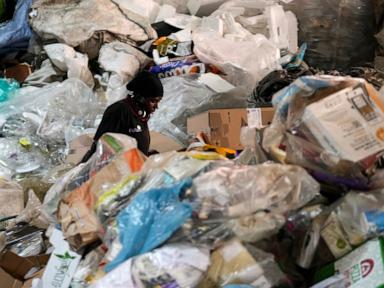
While city halls falter, an army of informal workers keeps urban centers from drowning in their own filth. Across the continent, millions of waste pickers work sunup to sundown sorting through mountains of refuse at massive dumpsites like Olusosun in Lagos or Dandora in Nairobi.
These workers sift through toxic hazards with bare hands, pulling out plastic, metal, and cardboard to sell to local scrap dealers. They form the backbone of urban recycling networks, recovering valuable materials that would otherwise sit in landfills for centuries.
Yet, they operate in extreme precarity. They face constant harassment from authorities, health hazards from toxic smoke, and exploitation from middlemen who buy their recovered materials at rock-bottom prices. Major cities treat these informal workers as a nuisance rather than an essential public service.
That is a profound mistake. Formalizing and supporting the informal waste sector represents one of the few viable paths forward. When cities partner with cooperatives of waste pickers, recycling rates climb, collection costs drop, and vulnerable workers gain dignity and financial security.
The Plastic Invasion and Global Supply Chains
Thirty years ago, much of the packaging in African markets was biodegradable. Food came wrapped in leaves, paper, or reusable glass bottles.
Globalization changed that overnight. Multinational corporations flooded African markets with cheap consumer goods packaged in single-use sachets, plastic wrappers, and polystyrene containers. A consumer can now buy a single serving of cooking oil, shampoo, or drinking water wrapped in plastic for pennies.
These cheap sachets revolutionized consumer access for low-income households. They also created an environmental catastrophe. Unlike rigid plastic bottles, tiny sachets are lightweight, worthless to scavengers, and nearly impossible to collect efficiently. They blow around in the wind, clog every crack in the urban landscape, and break down into microparticles that enter the food chain and water supply.
Western countries exported their manufacturing footprint, and with it, a packaging model built for automated recycling systems that simply do not exist in most African cities. Expecting underfunded municipalities to manage a tidal wave of imported plastic without producer accountability is a recipe for failure.
What Real Solutions Look Like on the Ground
Tackling this crisis requires throwing out old playbooks. Copying Western municipal models that rely on high taxes and centralized incinerators does not work in contexts with massive informal populations and constrained budgets.
Some cities are finding traction through decentralization and technology. In Kigali, Rwanda, strict plastic bans combined with community-led clean-up days have made it one of the cleanest capitals on the continent. Neighbors take collective responsibility for their surroundings, backed by strict enforcement from local authorities.
Tech startups are also stepping into the vacuum. Companies across Nigeria, Kenya, and Ghana use mobile apps to connect households directly with recycling collectors. Residents bag their plastic waste and earn cash or airtime credits in return. These models turn trash into currency, shifting the economic incentives for low-income families.
On the policy front, Extended Producer Responsibility laws are finally gaining ground. Countries like Kenya and South Africa are forcing beverage and packaging companies to take financial responsibility for the lifecycle of their products. When corporations have to pay fees proportional to the waste their packaging generates, product design changes fast.
Financing the Transition
Fixing waste management requires capital investment on a scale that local governments cannot shoulder alone. International climate funds, green bonds, and private equity need to flow into urban sanitation infrastructure.
Investing in waste is not just about keeping streets clean. It is a climate play. Decomposing organic waste in open dumpsites releases massive amounts of methane, a greenhouse gas far more potent than carbon dioxide in the short term. Capturing that gas or diverting organic waste into commercial composting facilities turns an environmental hazard into renewable energy and agricultural fertilizer.
Private investors often shy away from African municipal projects because of perceived political risk and weak revenue collection mechanisms. Overcoming that hesitation requires blended finance models where development banks take on early-stage risk, paving the way for private capital to build transfer stations, sorting plants, and recycling facilities.
Urban growth in Africa is not slowing down. By 2050, African cities will house an additional billion people. If municipal infrastructure does not scale to match that influx, current crises will pale in comparison to what comes next.
Cleaning up neighborhoods requires more than just buying a few more garbage trucks. It requires redesigning supply chains, empowering the informal workforce, enforcing corporate accountability, and treating waste management as a core pillar of economic development. The tools to fix the crisis exist. What is missing is the political will to deploy them before the garbage buries the future.