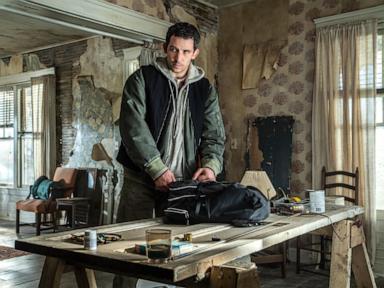
The "tortured artist" trope is the oldest trick in the Hollywood playbook. We are currently being fed a very specific, polished narrative surrounding Josh O’Connor and his supposed breakthrough moment with Disclosure Day. The story goes like this: a sensitive, high-caliber actor who usually finds his own face repulsive on screen finally finds peace with a performance. It’s a tale of growth, vulnerability, and artistic triumph.
It’s also a total fabrication designed to sell tickets and secure awards nominations.
The industry loves a story about an actor "hating" their own work. It signals humility. It suggests that the performer is so dedicated to the craft that they cannot bear the gap between their vision and the reality of the celluloid. But let’s be honest: if these actors actually hated watching themselves as much as they claim, they’d be in radio.
The Narcissism of Avoidance
When an actor tells a journalist they "hate watching themselves," they aren’t expressing a genuine psychological trauma. They are performing modesty. It is a strategic move to preempt criticism. If the actor is their own harshest critic, then the reviewer’s jab loses its sting.
In the case of Josh O’Connor, the narrative around Disclosure Day suggests a "pivot" in his relationship with his own image. This isn’t a psychological breakthrough; it’s a branding shift. By framing his previous work as something he "hated," he creates a false hierarchy where his current project is objectively superior. It’s a classic marketing "before and after" photo, applied to an ego.
True self-loathing is paralyzed. It doesn't show up to a multi-million dollar set and demand the lighting be just right. Professional acting requires an intense, almost pathological awareness of one’s physical presence. You cannot hit your marks, find your light, and maintain a "cheating" angle toward the camera if you are truly repulsed by your own existence.
The Myth of the First Viewing
The "Disclosure Day" anecdote hinges on the idea that the first time an actor sees the finished product is some sacred, raw emotional event.
Let’s dismantle the mechanics of a modern production. By the time a lead actor sits in a screening room for a finished film, they have:
- Spent months staring at themselves in hair and makeup mirrors.
- Watched "dailies" or "rushes" on small monitors between takes.
- Spent dozens of hours in ADR (Automated Dialogue Replacement) sessions, watching specific clips of their performance on a loop to sync their voice.
- Approved their own likeness for posters, trailers, and digital marketing.
The idea that O’Connor—or any actor of his stature—is "shocked" by what they see on screen is an insult to the intelligence of the audience. They know exactly what they look like. They know which takes were used. The "hatred" of the first viewing is a curated reaction for the press junket. It’s the "I woke up like this" of the cinematic world.
Why We Fall for the Vulnerability Trap
We live in an era where "relatability" is the currency of stardom. A god-like figure who is perfectly happy with their talent is boring and, worse, unlikable. We want our stars to suffer. We want them to feel the same insecurities we feel when we look at a bad tagged photo on social media.
The Disclosure Day narrative weaponizes this desire. By framing O’Connor’s experience as a journey from self-disgust to acceptance, the PR team humanizes a man who is, by all accounts, exceptionally successful, wealthy, and attractive. It bridges the gap between the elite performer and the insecure consumer.
But this "vulnerability" is a one-way street. The actor gets to keep the paycheck, the fame, and the critical acclaim, while the audience gets a warm, fuzzy feeling that their favorite star is "just like them." Except he isn't. He’s a professional mimic who is currently mimicking the concept of self-improvement to ensure you stay invested in his career trajectory.
The Problem With "Peace"
The article suggests that O’Connor finding "peace" with his performance is a sign of maturity. In reality, it’s a sign of a softening edge.
Great art rarely comes from a place of being "fine" with the result. The greatest directors—think Kubrick, Hitchcock, or Fincher—were notorious for their lack of "peace." They were obsessives. When an actor stops finding fault in their work, they stop searching for the truth in the next role.
If O’Connor has truly stopped "hating" his performances, he has likely just become comfortable with his own brand. He has recognized the patterns that work, the expressions that win awards, and the brooding silences that get clipped for TikTok edits. "Peace" is just another word for "predictability."
The Industrialization of the "Aha" Moment
"Disclosure Day" isn't a date on a calendar; it’s a narrative device.
In the business of film promotion, we see these "Aha" moments manufactured every season.
- The Physical Transformation: "I didn't recognize myself in the mirror."
- The Method Immersion: "I stayed in character for six months and forgot who I was."
- The Self-Reflection Breakthrough: "I finally saw the movie and felt... okay."
These are tropes designed to fill the vacuum of the 24-hour entertainment news cycle. They provide "insight" without actually revealing anything about the mechanical, often boring reality of film production.
The real story of Disclosure Day isn't about an actor's soul. It's about a production schedule, a legal requirement for a screening, and a publicist identifying a "hook" that would resonate with lifestyle journalists.
Stop Treating Actors Like Oracles
The fundamental flaw in the competitor's piece is the assumption that an actor’s internal state is the most interesting thing about a movie. It isn't.
An actor is a tool. A highly skilled, often charismatic tool, but a tool nonetheless. Their job is to serve the director's vision and the script’s requirements. Their personal feelings about their face are as relevant to the quality of the film as a carpenter’s feelings about the grain of the wood.
When we focus on whether Josh O’Connor "hated" or "loved" watching himself, we ignore the cinematography, the editing, the score, and the writing. we prioritize the celebrity's internal monologue over the actual piece of art.
This obsession with "actor growth" is a symptom of a culture that values the person over the product. We are more interested in the "journey" of the star than the destination of the story.
The Counter-Intuitive Truth
If you want to know if a movie is good, don't ask the actor how they felt watching it. Their perspective is the most biased, distorted, and unreliable data point in the entire production.
An actor who loves their own performance is often watching their own "tricks." They are seeing the moment they nailed a difficult line or the way the light hit their eyes. An actor who hates their performance is often just mourning the loss of the version of the scene that exists only in their head. Neither of these perspectives has anything to do with whether the scene actually works for the audience.
The "breakthrough" O'Connor claims to have had is likely just the realization that the PR machine works better when he plays along. He’s stopped fighting the image because he’s realized the image is the only thing that actually exists for the public.
Stop buying into the "Disclosure Day" epiphany. It wasn't a moment of clarity; it was a press release.
If an actor tells you they finally like their work, they’ve stopped being an artist and started being a landlord of their own reputation. They are no longer exploring; they are just collecting the rent.
Watch the movie. Ignore the therapy session.