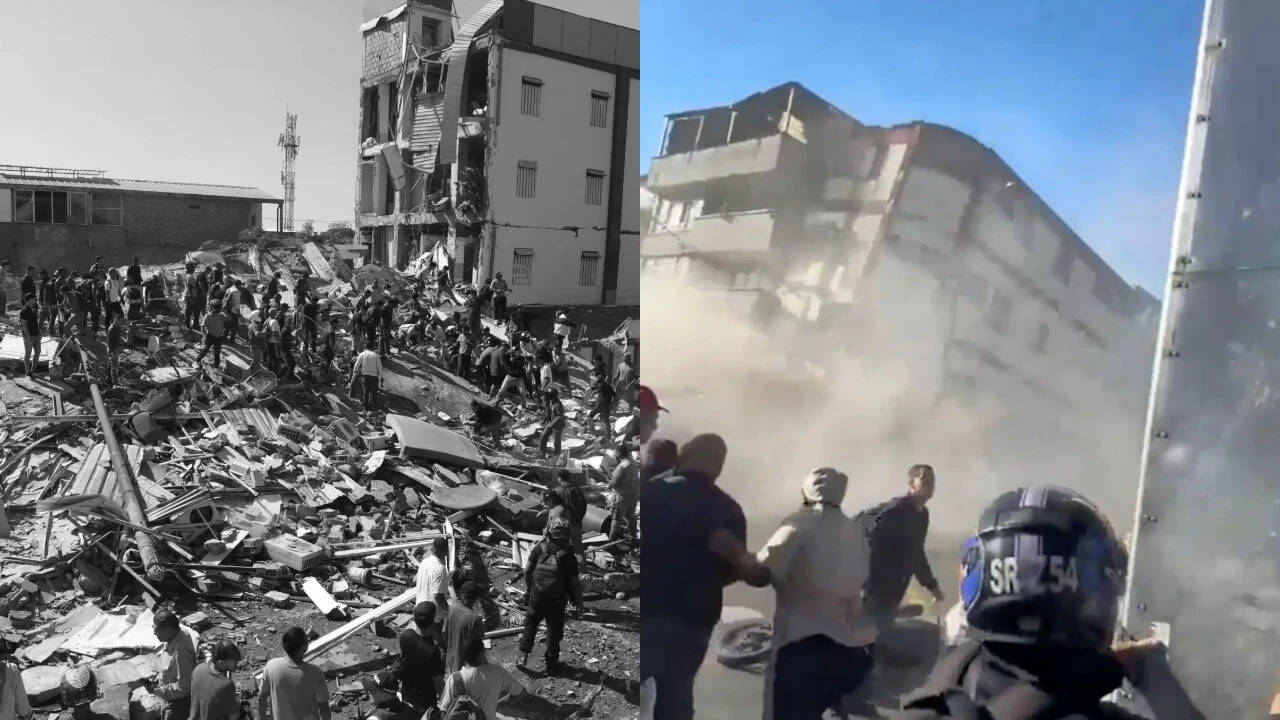
A violent 7.4 magnitude earthquake struck western Colombia, leaving dozens dead, crushing structures, and sending panic through entire cities from the epicentre out to Bogotá.
If you are tracking the disaster, the numbers are changing by the hour. The United States Geological Survey placed the epicenter near San José del Palmar in the rural Chocó region at a depth of about 107 kilometers. While initial reports put local death tolls past 100, modeling assessments from agencies like the USGS warn that the risk profile remains severe, with potential models suggesting high-end casualty scenarios if rescue operations cannot reach trapped citizens quickly.
Where the Damage Hits Hardest
Ground zero sits roughly 250 miles west of Bogotá. Yet the devastation spans multiple departments.
In Pereira, parts of the airport ceiling collapsed onto terrified travelers while buildings cracked open. Over in Cali, Colombia's third-largest city, multiple structures pancaked, leaving people buried under heavy concrete blocks. Historic architecture hasn't fared any better. In Manizales, a tower of the prominent neo-Gothic cathedral gave way, crashing right down onto the nave.
Understanding the USGS Casualty Projections
Why are agencies whispering about catastrophic figures? It comes down to regional infrastructure and population density. Over two million people experienced intense shaking rated high on the modified Mercalli scale.
When a 7.4-magnitude tremor hits at a relatively intermediate depth, energy propagates across massive distances. Poorly reinforced masonry crumbles instantly under those lateral G-forces. Even though modern high-rises in Bogotá mostly swayed without structural collapse, smaller towns in Chocó and Risaralda took the full brunt of the energy release.
President Abelardo de la Espriella declared an emergency status to route immediate funding toward the disaster zones. Emergency response tents are up, and rescue workers are manually shifting rubble because heavy machinery cannot navigate narrow, blocked streets in places like Quibdó and Pereira.
What Happens Next on the Ground
Aftershocks remain an immediate danger. A 5.0 magnitude aftershock hit less than an hour after the main event, terrifying residents who are already reluctant to sleep indoors.
If you have family or contacts in Pereira, Cali, or Chocó, communication lines are strained. Check official civil defense channels for updates rather than relying on unverified social media clips. Emergency services are prioritizing active extraction zones. Keep your local alert systems active and stay clear of compromised structures until structural engineers clear them.