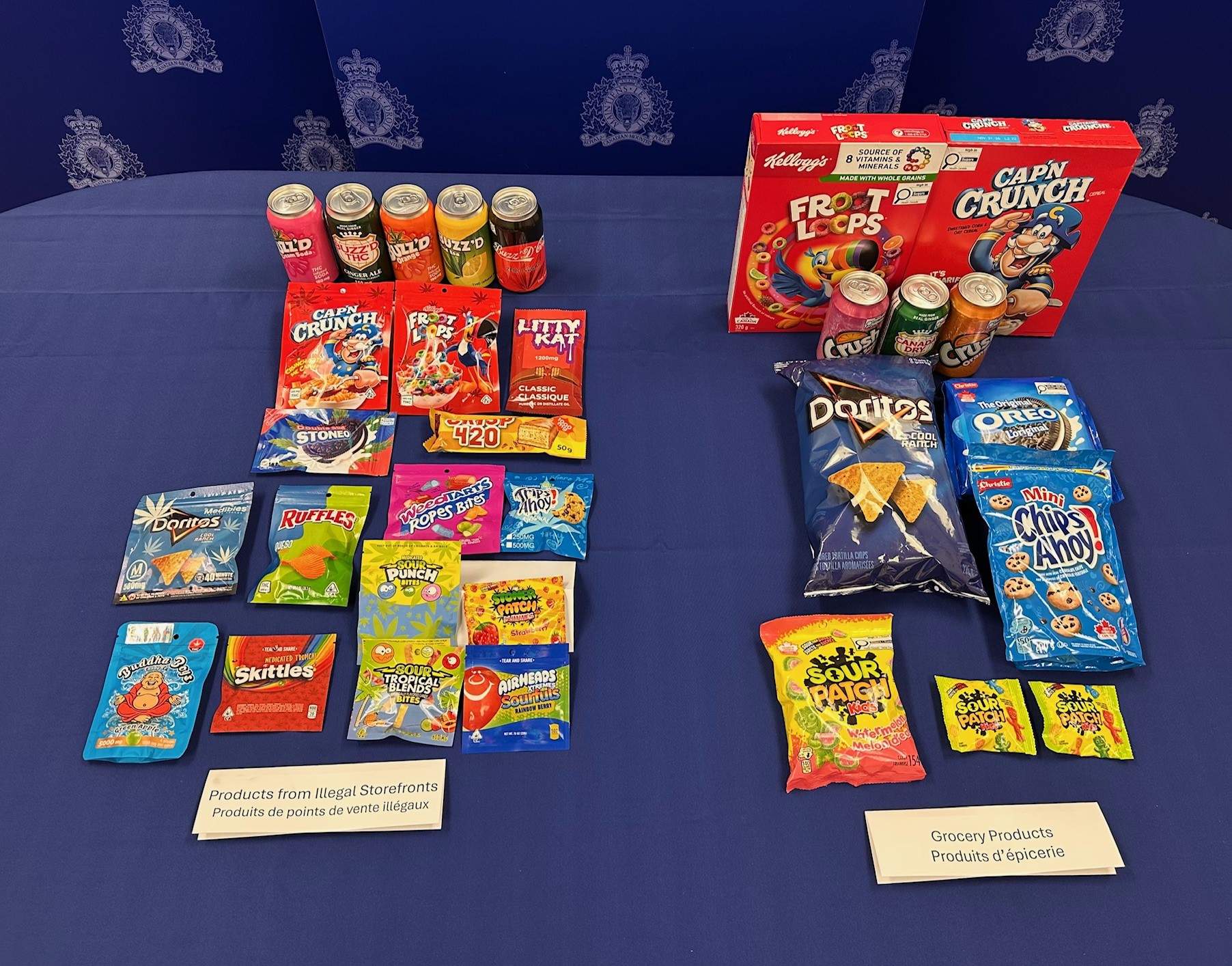
The Nova Scotia RCMP recently sounded the alarm on seized "super-weed" allegedly testing at over 50% THC. It makes for a terrifying headline. It suggests a new breed of "Frankenstein" cannabis lurking in the illicit market, ready to overwhelm the unsuspecting.
It is also a biological and chemical lie.
If you believe a flower can be 50% THC, you don't understand how plants work. You have fallen for "potency inflation," a phenomenon driven by faulty lab equipment, desperate black-market marketing, and law enforcement agencies that prefer sensationalism over botanical reality. We are witnessing the death of data in the cannabis industry, replaced by numbers that defy the laws of physics.
The Biological Ceiling
Cannabis is a plant, not a vial of pure distillate. A dried flower consists of cellulose, lipids, waxes, chlorophyll, terpenes, and mineral content. These components are not optional; they are the structural and metabolic requirements for the plant to exist.
In the world of high-end cultivation, the theoretical limit for THC in a flower is roughly 35%. Why? Because the trichomes—those tiny, resinous glands where cannabinoids live—can only occupy so much surface area.
To reach 50% THC by weight, half of the entire mass of that dried bud would have to be a single chemical compound. Imagine a wooden chair that is 50% glue. At that point, it isn't a chair anymore; it’s a puddle. When a lab produces a report claiming 40% or 50% THC in raw flower, they aren't measuring a plant. They are measuring a mathematical error.
The Chemistry of Deception
How do these "impossible" numbers end up in police press releases? It usually comes down to two factors: Moisture Content Manipulation and Lab Shopping.
In Nova Scotia and across North America, labs often report potency on a "dry weight basis." This is standard practice, but it is easily gamed. If a lab over-calculates the moisture loss or uses a drying process that degrades other plant materials faster than the THC, the resulting ratio becomes skewed.
Then there is the "Total THC" formula.
Most THC in a living plant exists as THCA (Tetrahydrocannabinolic Acid), which is non-psychoactive. To get the "Total THC" number, you use a specific calculation:
$$Total\ THC = (0.877 \times THCA) + THC$$
This $0.877$ multiplier accounts for the loss of a carboxyl group during heating (decarboxylation). However, many illicit market labs—and even some sanctioned ones—skip this conversion or use "Total Cannabinoids" to juice the stats, hoping the public won't notice the difference between psychoactive THC and inert plant matter.
I have spent a decade looking at COAs (Certificates of Analysis). I’ve seen cultivators send the same batch to three different labs and get results ranging from 18% to 32%. In the illicit market, where the Nova Scotia RCMP seized their samples, there is zero oversight. Dealers use "kief dusting"—rolling buds in resin glands—to spike the numbers. The RCMP isn't testing a natural flower; they are testing a "moon rock" or a fortified product and calling it "cannabis."
The Law Enforcement Incentive
Why would the RCMP push these numbers if they are scientifically dubious? Because high potency justifies high budgets.
If cannabis is "just a weed," it’s a nuisance. If it’s a "50% THC super-narcotic," it’s a public health crisis that requires tactical teams, increased surveillance, and massive seizures. By publicizing these extreme numbers, law enforcement creates a feedback loop of fear that ignores the actual risks of the illicit market—which are pesticides, heavy metals, and mold—in favor of a "potency" boogeyman that doesn't actually exist in nature.
The Real Danger is Not Potency
The fixation on THC percentages is the "alcohol proof" of the cannabis world, but it’s a terrible metric for safety or quality.
The danger of illicit cannabis isn't that it's "too strong." The danger is that it is unregulated. When a consumer buys a bag of "50% THC" weed from a street dealer, the high number is a distraction. While the buyer is worried about the strength, they should be worried about the myclobutanil (a fungicide) that turns into hydrogen cyanide when heated.
By focusing on the "scary" THC levels, the RCMP is missing the forest for the trees. They are validating the marketing claims of the very criminals they are trying to stop. If a dealer tells you their weed is 50% THC, they are lying to you. When the police repeat that claim, they are doing the dealer's PR for them.
The Lab Shopping Crisis
Even in the legal market, we have a "race to the top" that is destroying consumer trust. Labs are incentivized to provide higher numbers because cultivators won't use labs that give "low" results (anything under 20%).
This has led to:
- Selective Sampling: Only sending the tip of the "cola" (the top of the plant which is naturally higher in THC) for testing.
- Spiking: Adding THC isolate to the test sample.
- Calculation Bias: Failing to calibrate equipment to account for "noise" in the chromatograph.
If the RCMP wants to be a "trusted source" of information, they need to stop reporting raw data from unverified illicit-market "labs" or field kits that are notoriously inaccurate. These field kits often use colorimetric assays that can be tripped by CBD or even certain terpenes, leading to massive false positives or inflated readings.
Stop Asking "How Strong Is It?"
The premise of the RCMP’s warning is that "stronger is worse." This is a fundamental misunderstanding of substance use. In almost every other category—from spirits to prescription medicine—higher concentration allows for less consumption of the carrier material.
If someone wants to reach a certain level of effect, they can smoke one puff of "high potency" cannabis or an entire joint of "low potency" cannabis. The latter involves inhaling significantly more combustion byproducts, tar, and carbon monoxide. In a vacuum, higher potency is actually a harm-reduction tool, provided the user is educated on dosing.
The problem isn't the THC. The problem is the lack of a standardized, peer-reviewed testing protocol that applies to both seized and legal products. Until we have that, every "record-breaking seizure" announcement should be treated as fiction.
The Chemistry Doesn't Care About Your Narrative
We are currently in an era of "bro-science" masquerading as official policy. The RCMP’s report of 50% THC cannabis is the botanical equivalent of claiming you’ve discovered a breed of dog that is 50% wings. It sounds impressive until you look at the DNA.
Stop buying into the potency arms race. Stop believing press releases that treat plant biology like a comic book. The next time you see a headline about "50% THC flower," understand that you are looking at a math error, a marketing scam, or a lab that needs its license revoked.
The plant has limits. It's time our headlines did, too.
Buy the science, or buy the hype. You can't do both.