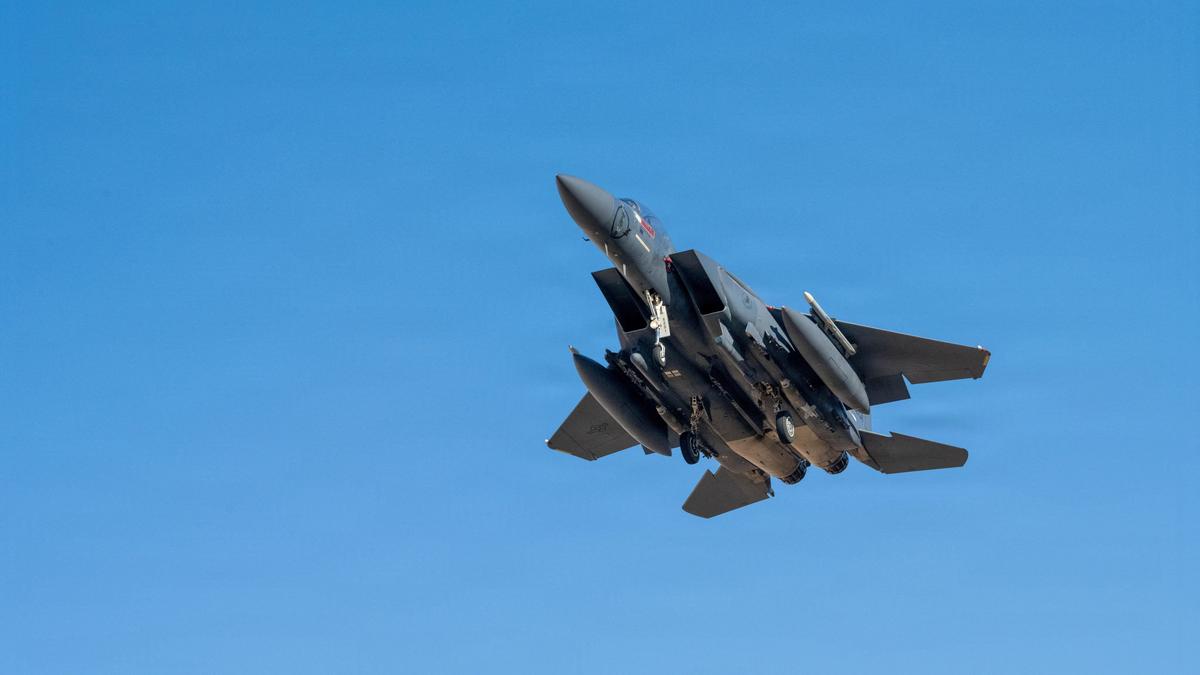
The recent sensationalist reporting surrounding the loss of 42 U.S. aircraft, including fighter jets and MQ-9 Reaper drones, is a masterclass in bureaucratic panic and superficial journalism. Mainstream defense analysts are looking at these numbers, clutching their pearls, and declaring a crisis in American air supremacy.
They are dead wrong.
The lazy consensus treats every airframe loss as a catastrophic failure of tactical execution or technological inferiority. This view is stuck in 1991. It treats a $30 million uncrewed drone with the same emotional and strategic weight as a manned stealth fighter. It completely misses the cold, calculated reality of modern attrition mechanics.
Losing 42 aircraft in a high-intensity, peer-level contested environment isn't a sign of defeat. It is exactly how the system was designed to function.
The Attrition Fallacy: Drones Are Bullets, Not Battleships
The absolute core of the misunderstanding lies in how we define an "aircraft." When a report lumps an MQ-9 Reaper into the same statistical bucket as an F-35 or an F/A-18 Super Hornet, the entire premise of the analysis collapses.
An MQ-9 Reaper is not a capital ship. It is an expensive, reusable bullet.
For two decades in the Global War on Terror, the U.S. operated in permissive environments. Airspace was uncontested. Drones loitered for 24 hours without a care in the world. This bred a dangerous, risk-averse mentality among defense commentators who began to view drone losses as major geopolitical setbacks.
In a conflict with a sophisticated state actor possessing dense integrated air defense systems (IADS), the calculus flips. You do not send a $100 million manned asset into the teeth of an S-400 or a localized electronic warfare grid to map out radar signatures. You send the Reaper. You send it knowing there is a high probability it will not return.
When that Reaper gets shot down, it has often already accomplished its mission: forcing the adversary to illuminate their radar, expose their battery positions, and expend a surface-to-air missile that costs more than the drone's payload.
I have watched defense acquisition boards burn through billions of dollars trying to make uncrewed systems completely invincible. It is a fool's errand. The moment you make a drone completely survivable, you make it too expensive to lose, which defeats its entire strategic utility.
Dismantling the People Also Ask Panic
The public panic surrounding these reports usually manifests in a few predictable, flawed questions. Let us dismantle them with brutal honesty.
Is the U.S. losing its technological edge?
No. The loss of airframes in a dense electronic warfare and missile environment is a baseline expectation of peer-level conflict, not a failure of engineering. If you fight a near-peer adversary and lose zero aircraft, it means you aren't actually fighting; you are sitting on the tarmac. The metrics of success have shifted from "zero losses" to "effective mission kill ratios." If the U.S. loses 42 platforms but successfully degrades the adversary's long-range strike capability and neutralizes their maritime denial assets, the air campaign is an overwhelming success.
Can the U.S. industrial base sustain these losses?
This is the real vulnerability, but not for the reasons the talking heads think. The issue isn't the loss of the physical airframe; it is the production pipeline for advanced precision guided munitions and specific sensor suites. Replacing a hollowed-out aluminum shell is easy. Replacing a localized active electronically scanned array (AESA) radar or a specialized electronic attack pod under current supply chain constraints is where the gears grind to a halt. The focus on the sheer number of "42 aircraft" is a distraction from the actual bottleneck: component-level industrial capacity.
The Brutal Math of Peer-Level Conflict
Let us look at the actual mechanics of a contested air campaign. A standard carrier air wing or land-based expeditionary wing operates on a matrix of expected attrition.
Imagine a scenario where a strike package is assigned to eliminate a heavily defended command and control node. The traditional view demands a flawless execution where every asset returns to base. The contrarian, realistic view recognizes that entering an environment saturated with tracking radars, VHF counter-stealth arrays, and multi-layered point defense systems requires a sacrifice.
+-------------------------+-------------------------+-------------------------+
| Airframe Type           | Unit Cost (Approximate) | Strategic Attrition     |
|                         |                         | Tolerance               |
+-------------------------+-------------------------+-------------------------+
| MQ-9 Reaper / Medium    | $30M                    | High (Disposable sensor |
| Altitude Uncrewed       |                         | platform)               |
+-------------------------+-------------------------+-------------------------+
| F/A-18 E/F Super Hornet | $70M                    | Moderate (Tactical      |
|                         |                         | strike, payload carrier)|
+-------------------------+-------------------------+-------------------------+
| F-35 Lightning II       | $100M+                  | Low (Force multiplier,  |
|                         |                         | stealth node)           |
+-------------------------+-------------------------+-------------------------+
When you look at the raw numbers from the report, the vast majority of the assets lost fall into the high-tolerance category. The media treats this like a catastrophic bleed. In reality, it is a deliberate trade of low-priority hardware for high-priority tactical positioning.
The real danger arises when defense planners buy into the media's panic and pull back their assets to avoid taking losses. The moment you prioritize airframe preservation over mission objectives in a high-intensity conflict, you have already ceded the airspace to the enemy.
Stop Trying to Build Invincible Platforms
The defense establishment is currently obsessed with gold-plating every single platform with exquisite survivability features. We are spending billions trying to make uncrewed systems stealthy, fast, and jam-resistant.
This approach is fundamentally broken.
Instead of treating 42 lost aircraft as a tragedy, the pentagon needs to lean into the loss column. We need to build cheaper, dumber, more expendable platforms that can be mass-produced at a scale that saturates enemy tracking capabilities. If an adversary has to fire a $5 million interceptor to down a $500,000 mass-produced decoy drone, we are winning the economic war of attrition, even if the charts show we "lost" an aircraft.
The downside to this contrarian approach is obvious: it requires a cultural shift that the military-industrial-complex is ill-equipped to handle. It means accepting that smoking craters on a runway are a metric of active, aggressive engagement rather than a failure of leadership. It means telling Congress that yes, we lost dozens of platforms this month, and yes, we need money to buy thousands more of the exact same disposable models.
The obsession with pristine mission records is a peacetime luxury. In a real conflict against a capable adversary, an empty hangar isn't always a sign of defeat—sometimes, it means your fleet was actually out there doing its job.
Stop counting the tails. Start counting the targets destroyed.