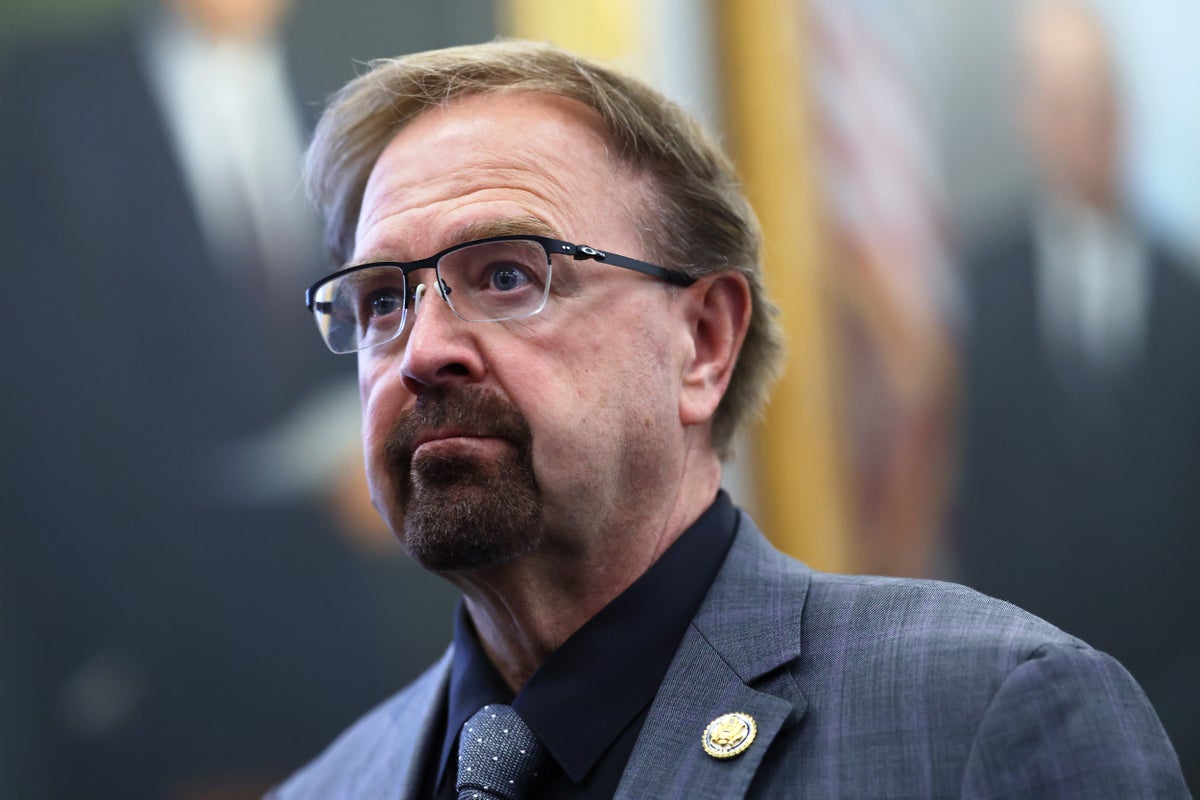
The clock on the microwave read 3:30. In most houses, that hour belongs to quiet breathing, heavy blankets, and the deep, undisturbed slumber of people who believe tomorrow will look remarkably like yesterday. But in the architecture of modern politics, 3:30 in the morning is not a time for sleep. It is a time for digital ghosts. It is when screens glow blue against tired faces, when press releases are dropped into the void like stones down a dry well, and when politicians decide how they want their exits to look before the morning papers hit the curb.
Phones buzzed across Washington. Reporters woke up, rubbing grit from their eyes, scrolling through a sudden, glowing statement. A conservative congressman, loud and unapologetic in his alignment with the Make America Great Again movement, had just pulled the plug. No farewell tour. No emotional press conference surrounded by tearful constituents or loyal staffers standing in stiff, supportive rows. Just a digital vanishing act in the dead of night.
He was not seeking reelection.
The official line would frame it as a personal choice, a desire to spend time elsewhere, a natural turning of the page. Power rarely admits its own panic. But beneath the sterile prose of the announcement lay an accumulation of shadows. Accusations of sexual harassment, whispered about in Capitol hallways and formalized in internal complaints, had been closing in. The walls were not falling all at once; they were shrinking slowly, inch by suffocating inch, until there was no room left to stand.
Power is a strange, intoxicating currency. It makes people believe they are immune to gravity.
Consider the anatomy of a scandal in the digital age. It rarely begins with a bang. It starts with a whisper in a dimly lit office. A comment that lingers too long in the air. A hand placed where it does not belong, followed by the terrifying calculus every subordinate faces: Do I speak up and risk my livelihood, my reputation, and my career, or do I swallow my dignity and keep typing?
Most people outside the beltway do not understand the profound imbalance of a congressional office. A Capitol Hill staffer is often young, intensely idealistic, and tethered to their boss not just by a paycheck, but by a shared ideology. To work for a powerful lawmaker is to be part of an inner circle. When that trust is weaponized, the betrayal cuts deeper than standard workplace harassment. It feels like an ideological betrayal, too.
The allegations against this specific congressman did not materialize overnight. They festered in the dark. They involved staffers who had trusted the machinery of power to protect them, only to find that the machinery was designed exclusively to protect the powerful. Internal HR processes moved at the speed of glaciers, bogged down by bureaucracy, legal caution, and the quiet, institutional desire to sweep dirt under a very heavy rug.
Yet, the modern world leaks. Silence has an expiration date.
When the tipping point approaches, the calculus of survival shifts. For months, the strategy had likely been defiance. Deny everything. Attack the accusers. Question their motives. Brand any negative coverage as partisan witch hunts designed to hobble the movement. It is a well-worn playbook, effective in rallying a loyal base that views every institutional accusation as proof of a conspiracy.
But there comes a moment when the private reality diverges too sharply from the public theater. Legal counsel reviews the numbers, the emails, the depositions, and the potential fallout. The math stops working. The loyal base might forgive a lot, but donors get skittish. Party leadership, looking ahead to a brutal general election cycle where every seat matters, calculates the electoral cost of keeping a liability on the ballot.
So the clock strikes 3:30 AM.
The midnight hour of politics is cowardice dressed up as convenience. By dropping news in the dead of night, operatives hope to bury the lede beneath the morning news cycle, letting it bleed out quietly before the evening talk shows find something shinier to chase. It is an admission of defeat delivered under the cover of darkness.
Walking away from a congressional seat is supposed to be hard. For most, it represents the culmination of a lifelong ambition, a crown jewel earned through years of aggressive campaigning, baby-kissing, and strategic alliances. To surrender that voluntarily—or semi-voluntarily—is an act of profound ego preservation. Better to bow out now, blame the exhaustion of the job, and slip into the lucrative embrace of a K Street lobbying firm or a conservative think tank where past scandals are treated as mere battle scars.
The staffers who brought these complaints forward did not get a midnight press release. They did not get a soft landing or a lucrative consulting gig. They got the quiet validation of knowing that, despite the institutional weight thrown against them, the man who held power over their daily lives was forced to retreat.
Yet, an exit in the middle of the night changes nothing about the systemic rot that allowed it to happen in the first place. A single departure is treated as a purge, a sign that the system self-corrects. But the system does not self-correct. It merely sheds a damaged skin and grows a new one, identical to the last.
The screen goes dark. The phone stops buzzing. The congressman goes back to sleep, or tries to, carrying the weight of a dismantled career into the dawn. Somewhere across the city, a former staffer wakes up, looks out the window at the early morning light, and realizes the world kept spinning after all.
The seat will be filled by someone new. The slogans will remain the same. The machinery will grind on, indifferent to the human collateral left in its wake, waiting quietly for the next digital ghost to appear at 3:30 in the morning.