A California-based climate tech startup recently claimed it used autonomous drones to generate an estimated 19 million gallons of additional precipitation over Alaska's Kenai Peninsula in just three hours. Rainmaker Technology Corporation executed seven coordinated missions using specialized aircraft to dispense silver iodide flares into supercooled clouds. This operation purported to solve the holy grail of atmospheric engineering: making weather modification mathematically measurable. Yet beneath the splashy figures lies a complex web of radar modeling, unverified assumptions, and intense regulatory friction that exposes the widening gap between corporate PR and atmospheric reality.
The Mechanics of Atmospheric Intervention
Cloud seeding is not a modern invention. The practice dates back to the late 1940s when General Electric researchers discovered that introducing dry ice or silver iodide into supercooled clouds could stimulate ice crystal formation. Water droplets suspended in clouds at temperatures below freezing often remain liquid because they lack a solid nucleus around which to freeze. Silver iodide shares a crystal lattice structure remarkably similar to ice. When introduced into a cloud, these microscopic particles trick moisture into freezing, allowing ice crystals to grow heavy enough to fall as rain or snow. Expanding on this idea, you can find more in: Structural Arbitrage in the Labor Market Why AI Protectionism Fails.
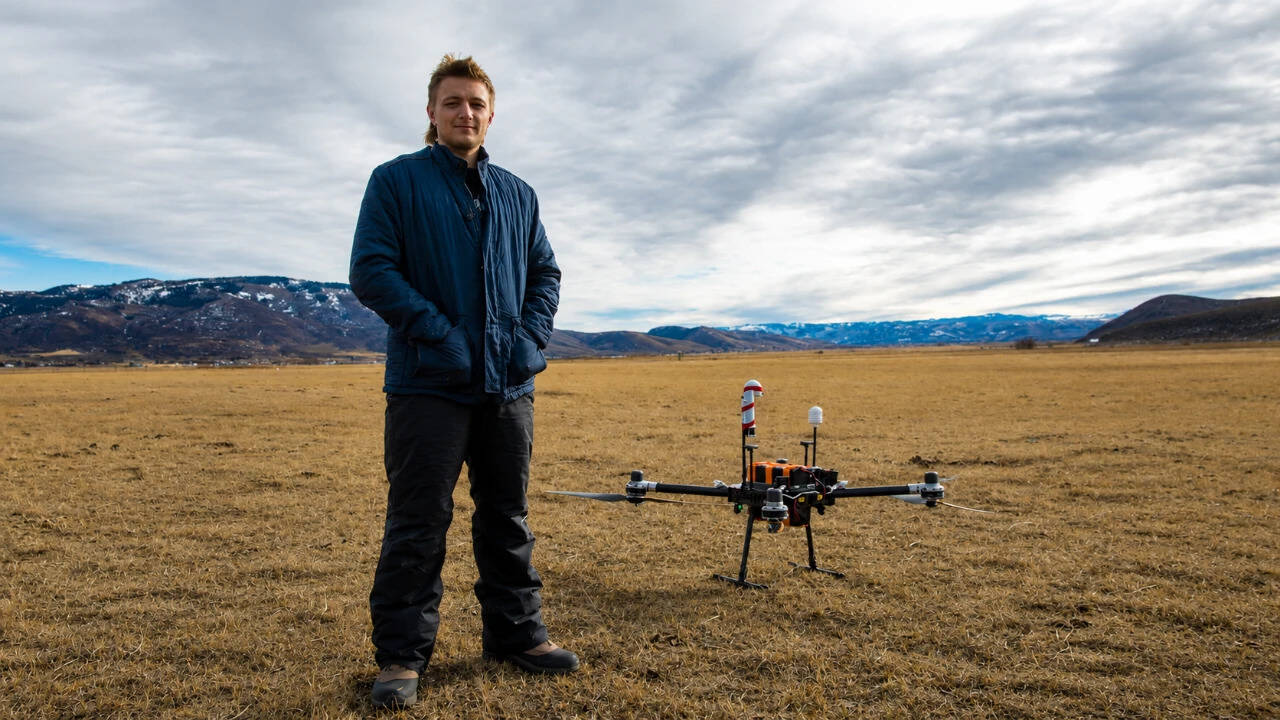
Traditionally, this work relied on ground-based generators burning silver iodide solutions or manned aircraft flying dangerous missions through icing conditions. Rainmaker substituted those piloted planes with autonomous quadcopters named Elijah. During the August test over the Kenai Peninsula, two of these drones completed seven missions, releasing 19 flares containing roughly 374 grams of silver iodide between 11,500 and 14,100 feet.
The company tracked the results using NEXRAD dual-polarization radar, identifying seven distinct precipitation signatures that correlated with their flight paths. By comparing radar reflectivity inside the seeded zones against unseeded background weather, their analysts estimated a mean increase of 57.6 acre-feet of water, or roughly 19 million gallons. Observers at Mashable have also weighed in on this situation.
The Problem With Proving Rain
The central Achilles heel of weather modification has always been attribution. Clouds are chaotic, dynamic systems driven by global thermodynamics. Proving that a specific drop of water fell because a drone dropped a silver iodide flare—rather than through natural condensation—requires separating human intervention from background noise.
Independent atmospheric scientists point out that Rainmaker's 19-million-gallon figure is a modeled estimate derived from radar algorithms, not a physical volume captured in a bucket. Radar measures reflectivity, which technicians translate into precipitation rates using mathematical formulas. Those formulas depend on assumptions about droplet size, wind shear, and updraft velocity.
When a low-pressure system is already dropping natural precipitation across a coastal mountain range like the Kenai, isolating the net-new water created by 374 grams of chemical flares resembles trying to measure the splash of a single pebble dropped into an active surf. The Government Accountability Office has repeatedly categorized the long-term economic and volumetric benefits of cloud seeding as unproven precisely because true control groups do not exist in the open atmosphere.
Regulatory Firestorms and Airspace Realities
While engineers focus on radar signatures, policymakers and aviators are raising alarms about the commercial deployment of uncrewed weather modification systems. Rainmaker's aggressive expansion strategy targets severe drought zones across the American West, including the Colorado River Basin and the shrinking Great Salt Lake in Utah. State governments desperate for freshwater are willing partners; Utah invested nearly 16 million dollars in precipitation enhancement programs.
Resistance, however, is hardening. The Air Line Pilots Association has formally warned that operating uncrewed aircraft carrying explosive pyrotechnic flares introduces severe safety risks in shared airspace, citing potential collision hazards and debris management. Public backlash is equally fierce. Property owners frequently object to having chemical agents dispersed over their land without consent. Legislative pushback has materialized in states like Florida and Tennessee, where lawmakers introduced outright bans on intentional atmospheric manipulation. At the federal level, lawmakers have floated proposals such as the Clear Skies Act to restrict weather-altering chemical dispersals entirely until comprehensive health and environmental studies are completed.
The Water Crisis Context
The urgency driving these aerial experiments cannot be dismissed. The American West faces an unprecedented hydrological deficit. Lake Powell operates near fractional capacity, and the Colorado River system—which sustains forty million people—struggles beneath structural over-allocation and prolonged aridification. In this climate of scarcity, the promise of manufactured precipitation acts as a potent political sedative.
Yet relying on drone-delivered silver iodide to refill reservoirs treats symptoms while ignoring structural consumption patterns. Even if future research validates that autonomous fleets can consistently squeeze millions of gallons from coastal clouds, atmospheric water generation remains bound by basic mass conservation. You cannot manufacture moisture that is not already present in the sky. As climate volatility intensifies, treating the sky as an industrial pipeline might buy temporary relief, but it offers no escape from the hard limits of terrestrial hydrology.