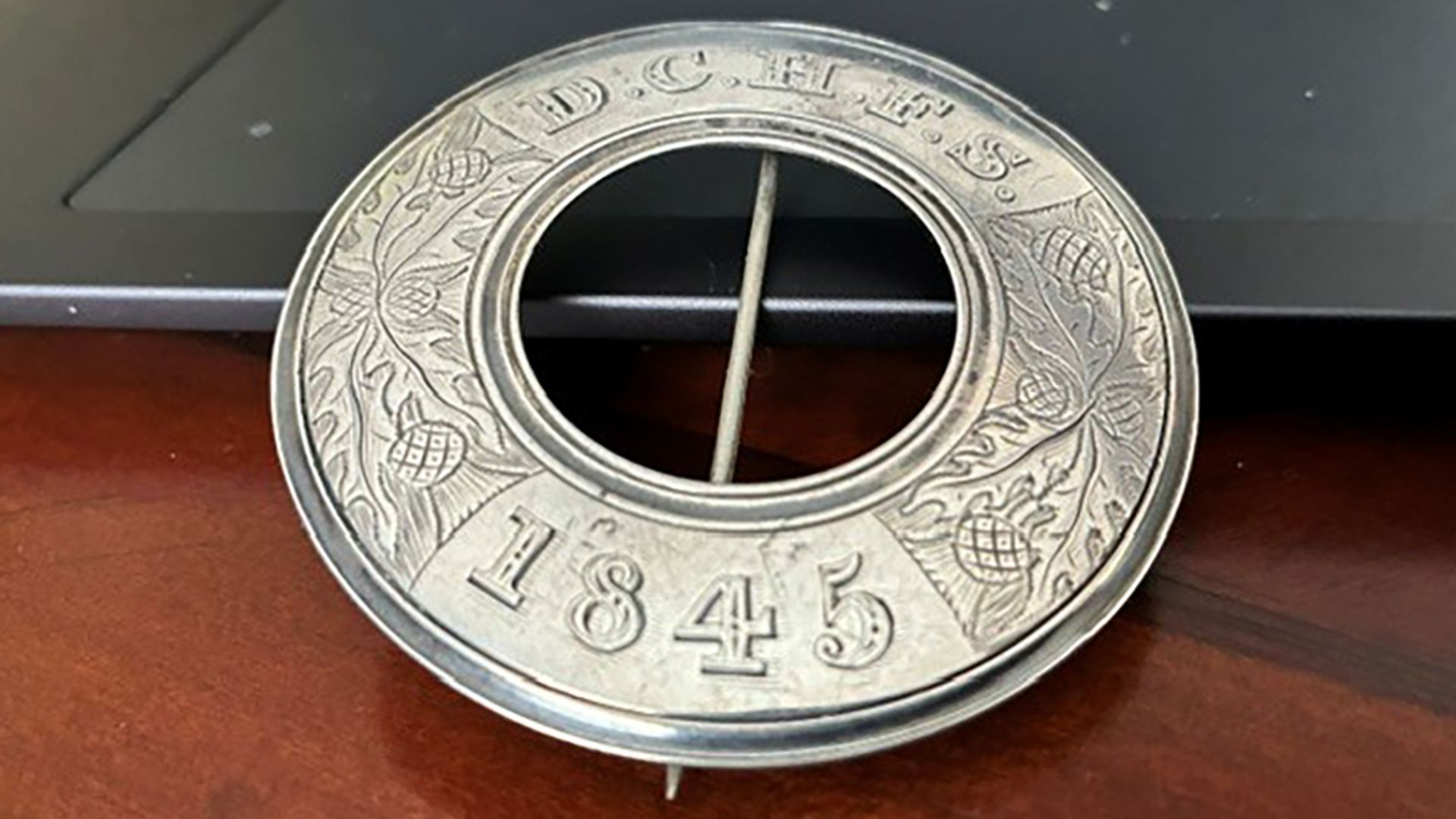
Every few months, the mainstream media stumbles over a dusty relic, slaps a breathless headline on it, and manufactures a collective swoon. The recent media circus surrounding an American man tracking down the origins of an 181-year-old Scottish brooch is a masterclass in this affliction. Headlines screamed that the mystery was solved, treating a piece of Victorian metalwork like the Holy Grail. The public ate it up, cooing over the heartwarming nature of lost heritage reclaimed across oceans.
It is a comforting narrative. It feeds the modern obsession with provenance, ancestry tourism, and the desperate desire to connect our hyper-fragmented digital lives to something tangible and ancient.
It is also largely a distraction built on romanticized nonsense.
When you strip away the Hallmark-movie framing, the obsession with unearthing random heirlooms reveals a deep-seated historical illiteracy. We do not actually care about the history of the object; we care about the narrative mirror it provides for our own egos. Let us dismantle why the internet lost its mind over a mid-nineteenth-century trinket and why our reverence for historical discovery has curdled into sentimental vanity.
The Manufacturing of Manufactured Mystery
Let us look at the facts of the case without the emotional varnish. A man in the United States acquires an old Scottish brooch—an artifact dating back to the early Victorian era, around the 1840s. Through some archival digging, local records, and a bit of genealogical sleuthing, he links it to a specific family or maker across the Atlantic. Cue the local news segments, the viral social media threads, and the collective sigh of satisfaction from people who should be paying attention to things that actually matter.
The media labels this a "mystery solved." But was there ever a mystery?
In historical terms, a mass-produced or even custom-commissioned 181-year-old piece of jewelry is not an enigma; it is Tuesday. During the nineteenth century, Scotland was churning out tourist trinkets, clan badges, and cairn-gairm-set silver by the tens of thousands. The Industrial Revolution had hit the jewelry trade hard. Birmingham factories were stamping out faux-Celtic revival pieces that were shipped all over the British Empire and exported to the Americas to satisfy the era's raging appetite for romantic nationalism sparked by Sir Walter Scott.
When we call a standard piece of Victorian commercial output a "mystery," we are demonstrating a profound misunderstanding of the past. We treat history like a lost episode of a true crime podcast where every object must have a clandestine origin story, a tragic backstory, or a royal connection. The reality is far more mundane and far less cinematic: someone bought a souvenir, packed it in a trunk, crossed an ocean, and lost track of it because people have been terrible at organizing their belongings for millennia.
The American Obsession with Ancestral LARP
There is a distinct cultural engine driving these stories, and it is almost exclusively North American. The New World suffers from a acute case of temporal vertigo. Without millennia-old ruins in the backyard, there is a persistent hunger for deep roots.
When an American stumbles upon a European artifact, they do not just see an old piece of metal; they see a passport to a fictitious noble lineage. They engage in ancestral LARP, projecting their identity onto an inanimate object that belonged to a complete stranger who happened to share a geographic region or a vaguely similar surname.
I have watched otherwise rational people spend thousands of dollars chasing down genealogical rabbit holes because they bought a rusty belt buckle or a tarnished brooch at an antique mall in Ohio. They want to believe that the object chose them, that it represents some invisible thread of destiny pulling them back to the mist-shrouded Highlands.
It does not. It represents consumer surplus from the reign of Queen Victoria.
The romanticization of the artifact blinds us to actual historical context. If you want to understand 1840s Scotland, studying a single middle-class brooch tells you remarkably little about the Highland Clearances, the devastating economic displacement, the cholera epidemics, or the radical political movements reshaping the British Isles at the very moment that trinket was being pinned to a woolen plaid. But studying the broad socio-economic forces is hard work. Buying a shiny thing on eBay and inventing a tear-jerking narrative about lost heritage is easy.
The Cult of Provenance and the Antiques Roadshow Fallacy
We have been conditioned by decades of reality television to view history as a series of monetary and emotional evaluations. The modern antique market operates on a simple principle: manufacture scarcity, inject sentiment, and watch the valuation soar.
When a story like this hits the news cycle, it validates the hoarders, the attic-scourers, and the cottage-industry historians who make a living turning common domestic scrap into precious relics. Every time a localized news outlet frames a standard genealogical trace as a groundbreaking historical revelation, it cheapens real scholarship.
Real historians spend decades crawling through damp parish registers, deciphering Latin and legal shorthand, and mapping out the brutal, unglamorous realities of demographic shifts. They do not get viral tweets when they prove that a local tax record from 1845 shows a modest merchant buying a silver-plated brooch for his wife's birthday. Yet that is the actual provenance of ninety-nine percent of these "mysterious" finds.
We elevate the exceptionalism of the single object over the systemic truth of the era. By focusing all our emotional bandwidth on one man finding out who owned a piece of jewelry in 1845, we ignore the structural conditions that forced millions of Scots off their land and into the hulls of emigration ships during that exact decade. The brooch did not survive the famine or the clearances; it survived in a velvet-lined box in a climate-controlled suburban home. It is a monument to comfort, not survival.
Dismantling the Myth of the Lost Relic
Let us be entirely honest about what happens next. The article gets shared fifty thousand times. People comment about how "things were made to last back then" and how "they don't make stories like this anymore."
Except they do. Every day, thrift stores, estate sales, and digital marketplaces are flooded with the discarded material culture of our great-grandparents. Most of it ends up in landfills because it has no intrinsic utility and no genuine historical significance. The only difference between a worthless junk drawer find and a viral news story is the PR machinery and the willingness of a journalist to lean into the viewer's desire for a fairy tale.
We need to stop treating history as a comforting bedtime story designed to make us feel connected to a romanticized past that never actually existed. The Victorians were not mythical elves crafting magical talismans; they were industrial capitalists, exploited laborers, and anxious tourists buying mass-produced souvenirs just like we do at airport gift shops today.
Stop looking for yourself in a piece of stamped silver from the 1840s. The past is not a mirror waiting to validate your need for a heritage. It is a foreign country, and most of its inhabitants left behind tax receipts, not riddles.