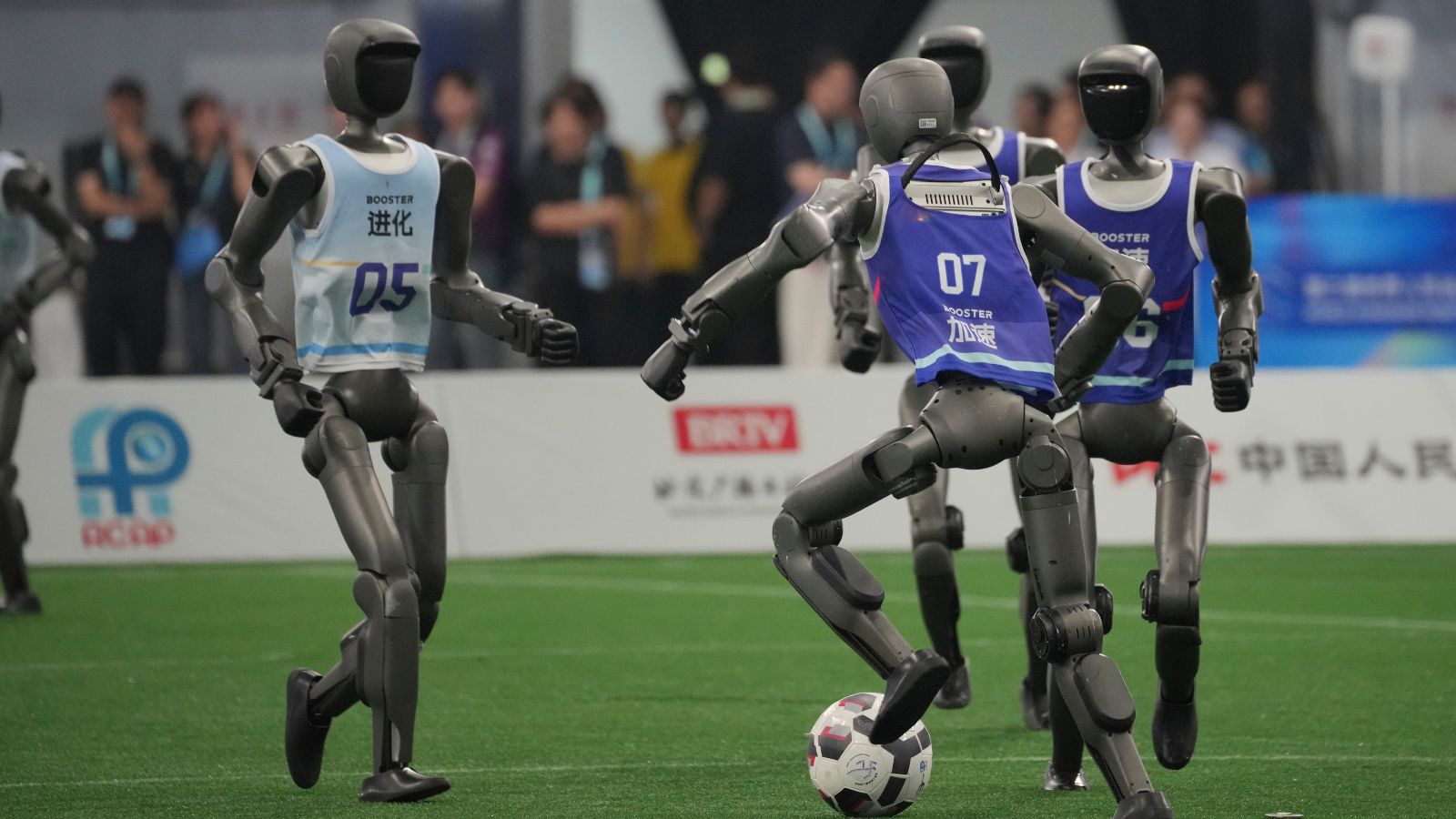
A bipedal machine recently crossed a 100-meter finish line faster than the peak velocity of legendary track athletes, sparking global headlines about metal sprinting past biological limits. The spectacle drew crowds, ignited nationalistic chest-thumping, and provided a neat 15-second clip for social media feeds. It also completely misses the point of why bipedal engineering matters.
Measuring a humanoid robot by its top speed in a straight line on a flat, predictable running track is the mechanical equivalent of testing a sports car by pushing it off a cliff to see how fast it falls. The engineering community does not suffer from a lack of straight-line velocity. We suffer from a profound inability to build machines that can walk across a cluttered workshop floor without tipping over, clean a kitchen sink, or carry an awkward 40-pound box up a flight of uneven stairs without requiring a team of handlers holding emergency kill switches.
The pursuit of sprinting records is a distraction driven by marketing departments rather than laboratories. When you examine the engineering reality beneath the polished PR campaigns, the gulf between a track-bound sprinter and a genuinely useful utility machine becomes painfully clear.
The Physics of Straight Lines Versus the Chaos of Reality
To make a bipedal chassis sprint down a designated strip of polyurethane, engineers strip away the very capabilities that make a machine useful. Real-world mobility requires a heavy computational payload, advanced sensor suites, and articulated hands capable of manipulating objects of varying weights and textures.
A record-breaking runner robot sheds these requirements. It is often a hyper-specialized frame built around lightweight carbon composites, specialized linear actuators, and massive battery banks dedicated solely to momentary thrust. It does not carry the weight of onboard perception computers running simultaneous localization and mapping algorithms. It does not carry heavy industrial-grade manipulators. It is a drag racer designed to do one thing on a sterilized surface.
The moment you introduce a pebble, a patch of oil, or a two-degree slope, the delicate control loops governing high-speed bipedal gait collapse. Human sprinters like Usain Bolt do not merely push off the ground with brute force; they possess exquisite neuromuscular feedback loops that adjust ankle stiffness, hip rotation, and torso lean dynamically at microsecond intervals. They feel the track. They adapt to headwinds.
Current robotic control systems rely primarily on pre-programmed trajectories and high-frequency model predictive control. These frameworks work remarkably well when the environment is mathematically constrained. They fail catastrophically when the ground shifts by a millimeter unexpectedly.
The Funding Loop and the Need for Spectacle
Why do well-funded laboratories and state-backed manufacturing initiatives continue to chase track records? The answer lies in the economics of venture capital and public perception.
Building a functional, general-purpose bipedal worker is an unglamorous, grinding endeavor. It involves thousands of hours spent debugging thermal management issues in knee actuators, refining cable routing through shoulder joints, and writing low-level firmware to prevent motor controllers from overheating under load. There is no viral video in a motor drawing three amps of steady current while holding a wrench.
A 100-meter dash, however, translates instantly across cultural boundaries. It mimics the language of international sports competition. It allows stakeholders to claim dominance in a technological race without having to prove that their machines can perform economically viable labor in a warehouse or a hospital.
This spectacle creates a dangerous distortion in public expectations. Factory managers and logistics executives watch a robot sprint past an arbitrary finish line and assume that general automation is just around the corner. When they eventually purchase hardware that struggles to step over a discarded shipping pallet, disillusionment follows. The hype cycle outpaces the physics, leaving a trail of abandoned pilot programs and deflated balance sheets.
What Real Utility Actually Demands
If we strip away the Olympic theater, the metrics that actually matter for humanoid deployment look entirely different from a stopwatch.
Energy Efficiency
A sprinting machine devours electrical current at a rate that would drain an industrial battery pack in minutes. A practical worker must operate for an eight-hour shift on a single charge, performing variable tasks that range from idle standing to heavy lifting. Peak velocity is irrelevant if the machine requires a dedicated charging tether every two hundred meters.
Compliance and Safety
High-speed limbs are inherently dangerous. A metallic leg moving at track speeds possesses enough kinetic energy to crush bone upon impact. Warehouses and human-centric workspaces require compliant actuation—joints that can yield, absorb shock, and safely deflect when they encounter an unexpected obstacle or a clumsy human coworker. Speed is the enemy of safety in tight quarters.
Versatility Over Specialization
A machine optimized for a 100-meter sprint is about as useful in a real-world supply chain as a Formula One car is for delivering groceries down a gravel driveway. The future belongs to platforms that can kneel, crawl, squat, balance on one foot while reaching overhead, and manipulate standard industrial tools without custom attachments.
The Hard Truth About Mechanical Evolution
The engineers pushing these bipedal platforms to their physical limits are extraordinarily talented. They are solving complex problems regarding ground reaction forces, torque density, and high-frequency sensor fusion. The tragedy is that their brilliance is frequently hijacked for promotional theater.
We do not need machines that can outrun a professional athlete. We need machines that can unload a shipping container in August without catching fire, sort through unsorted recycling bins without jamming, and navigate a disaster zone where the blueprints no longer apply.
The finish line on a running track is an illusion of progress. True capability will not be measured by how fast a robot can cross a line, but by how long it can stay in the field working without human intervention. Until the industry shifts its focus from viral sprint videos to the unglamorous physics of reliable, adaptive labor, the humanoid revolution will remain trapped in the starting blocks.