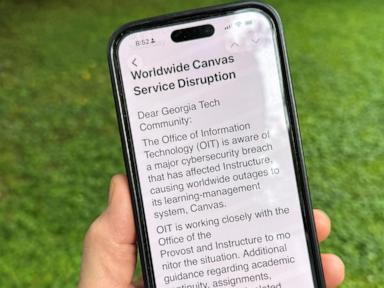
Buying back your stolen reputation is a sucker’s game. The headlines are buzzing with the "news" that a deal was struck to delete data exfiltrated from the Canvas educational platform. The narrative is predictably soft: a crisis averted, student privacy "protected" through a strategic payout, and a return to normalcy.
It is a lie.
If you believe a criminal organization deletes your sensitive files because you sent them a Bitcoin tip, you shouldn’t be running a lemonade stand, let alone a global educational tech infrastructure. Paying a ransom for "data deletion" is the digital equivalent of paying a blackmailer to burn a photograph while they are standing next to a Xerox machine.
The Myth of the Digital Shredder
The industry consensus is lazy. It suggests that these negotiations are a necessary evil to "mitigate risk." This assumes there is a verifiable way to ensure a threat actor doesn't keep a copy. There isn't. In the world of bits and bytes, "delete" is a pinky swear from a thief.
When a group like the one targeting Canvas or any other massive SaaS provider hits a target, they operate on a business model of maximum extraction. The primary extraction is the ransom. The secondary extraction is the long-tail value of the data.
In every incident response I’ve spearheaded over the last decade, the pattern is the same. The "deletion" agreement is a PR tool for the victim company to tell shareholders they "took every possible step." In reality, that data is already indexed, cached, or sold to a second-tier broker before the negotiation even hits the final stage.
Why Negotiating Validates the Wrong Metrics
Companies view these payouts as a line item in a recovery budget. They are wrong. It is a marketing spend for the hackers.
By paying to "delete" data, Canvas and companies like them are effectively funding the R&D for the next breach. You aren't just paying for your own mistakes; you are subsidizing the destruction of your peers.
- Logic Check: If hackers actually deleted the data every time, they would lose their leverage for future "subscriptions" to their silence.
- The Reality: Data is often leaked anyway—months or years later—under a different "brand" or through a "third-party leak" to maintain plausible deniability for the original extortionist.
The "deal" reached here isn't a victory. It’s a surrender that ignores the fundamental physics of the internet: once data is out, it stays out.
The Liability Shift
Boards of directors love the "deal" because it shifts immediate liability. If they don't pay and the data is dumped, they face a class-action lawsuit for negligence. If they pay and the hackers claim to delete it, the board can argue they acted in the best interest of the users.
This is a legal shield, not a security strategy.
We need to stop asking "How much should we pay?" and start asking "Why was the data unencrypted and accessible enough to be worth stealing?" The fixation on the negotiation is a distraction from the architectural failure. Educational platforms are notorious for sprawling, interconnected databases that prioritize "user experience" over hardened silos.
When you treat security as a friction point rather than a foundation, you end up writing checks to criminals.
The Zero-Trust Lie
Industry insiders love to throw around "Zero Trust" as a buzzword. But the moment a breach happens, they revert to a high-trust model—specifically, trusting the word of the attacker.
Imagine a scenario where a university system is told their students' PII (Personally Identifiable Information) is gone. They notify the students, the news cycle moves on, and three years later, those students are targeted by hyper-specific phishing attacks using data from that "deleted" breach. The school has zero recourse. The hackers have rebranded. The money is long gone.
True Zero Trust means assuming the data is compromised the moment the perimeter is breached. It means assuming the "deal" is a farce.
Stop Protecting the Brand, Start Protecting the User
The "lazy consensus" says that paying prevents the "worst-case scenario" of a public data dump.
The actual worst-case scenario is a false sense of security. When a company announces they’ve "secured" the deletion of data, users stop changing passwords. They stop monitoring their credit. They trust the platform again.
This is dangerous.
The honest, brutal move for any tech giant—Canvas included—is to admit the data is gone forever. Tell the users: "It was stolen. We can't get it back. We won't pay the thieves because we won't lie to you about your safety."
That destroys the stock price for a quarter. It saves the users for a lifetime.
The Economics of the Breach
Hackers are rational economic actors. They target sectors with high emotional stakes and low security margins. Education is the perfect storm. The "deal" reached in this case only confirms to the dark web that the education sector is a reliable ATM.
Every time a platform pays, the insurance premiums for every other school and ed-tech provider on the planet go up. You are participating in a cycle of systemic inflation for cybercrime.
Instead of paying for "deletion," that capital should be diverted into:
- Hardware Security Modules (HSMs) for all sensitive data at rest.
- Bounty programs that actually outbid the black market.
- Aggressive, offensive legal action to claw back assets.
The Fraud of Ransomware-as-a-Service
Most people don't realize that the person you're "negotiating" with is often just a middleman using a rented toolkit. They don't even have the technical authority to guarantee the deletion of data across the entire infrastructure of their "affiliates."
The "deal" is a contract signed in sand.
We have allowed a culture of "pay and pray" to dominate the C-suite. It is time to treat these payouts as what they are: an admission of total systemic incompetence.
If your data is stolen, it is public property. Act accordingly. Stop the charade of the "successful negotiation." There is no such thing as a win when you’re buying back your own failures.
Burn the budget on defense, or prepare to be a repeat customer.